Earth Index Lets You Search for Stuff
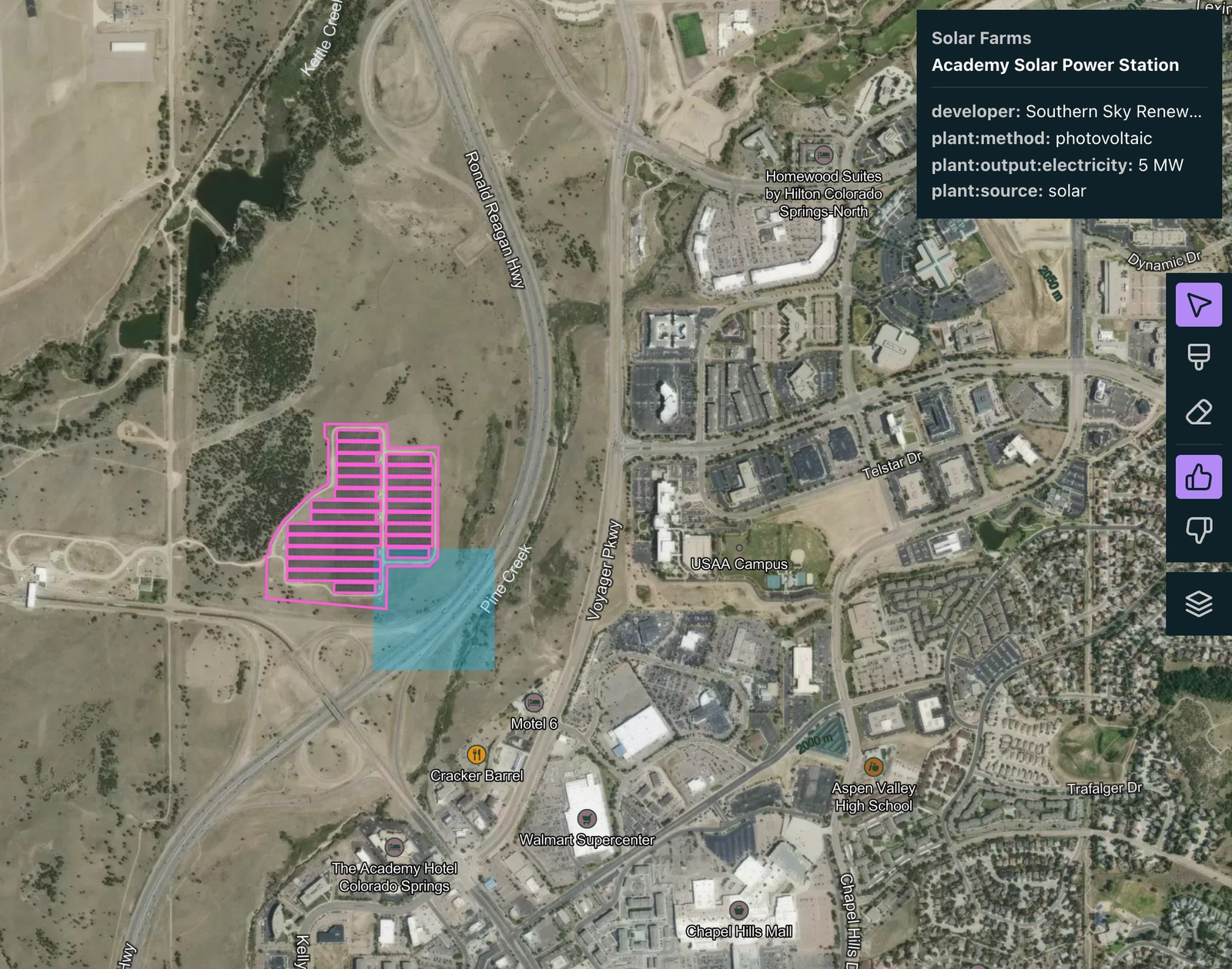
Earth Genome has added a new AI-driven feature for creating reference layers in Earth Index, a similarity-search application allowing conservationists to identify locations of environmental harm.
Andrew Milligan, Earth Genome:
We recently launched Search for Stuff, a new way to hit the ground running in Earth Index. Describe what you’re looking for in plain language (solar farms, quarries, water treatment plants) and Earth Index builds a reference layer of known locations across your area of interest.
Every search in Earth Index starts with examples. Quick Search and Deep Search learn from the places you label, so the first step in any project is finding a few positive examples. That used to mean scanning imagery by hand or uploading your own GeoJSON file. Search for Stuff gives you a head start from open data.
It simplifies the initial step of building a reference layer that forms the basis for finding similar locations elsewhere. Instead of tracing known locations, you can now just describe what you’re looking for in plain language.
Search for Stuff uses OpenStreetMap data to create a set of features likely to match your search.
Under the hood, Search for Stuff uses a large language model to translate your request into the vocabulary of OpenStreetMap: the tags volunteer mappers apply to features all over the world to describe what they are. The model considers synonyms and regional terms, and it can search the web when a concept is unfamiliar. Because language models sometimes make things up, every tag is checked against Taginfo, the public record of how OpenStreetMap tags are actually used, and rare or invented tags are dropped. We then look for matching features inside your project area and turn the results into map tiles.
Search for Stuff wins this year’s “Best Name for a new Product” award. It perfectly encapsulates the fuzzy, describe-it-and-see nature of searching with AI.